
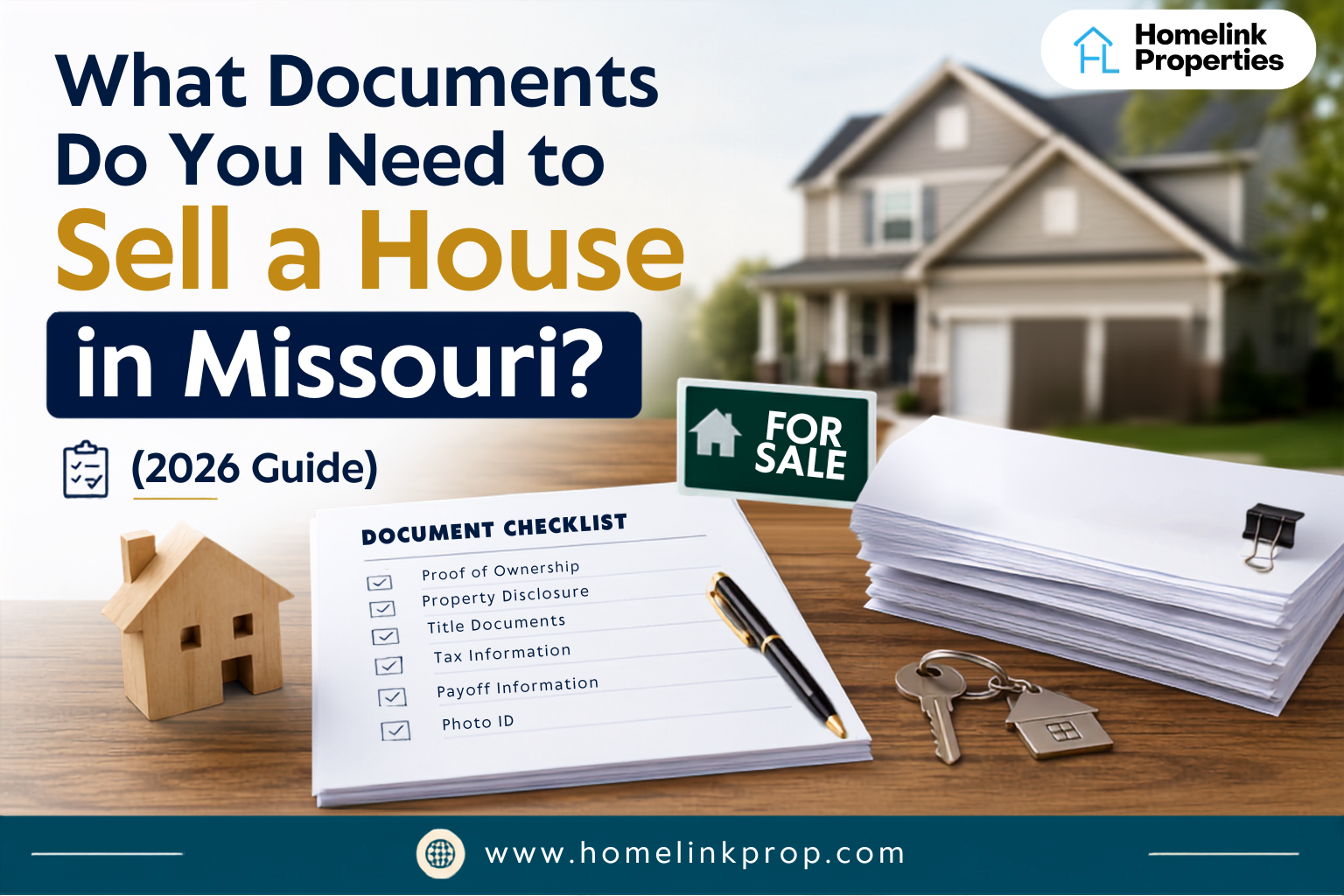
To sell a house in Missouri, you need your property deed, a seller’s disclosure statement, a lead-based paint disclosure (for homes built before 1978), your mortgage payoff statement, property tax records, a signed purchase agreement, and closing documents like the settlement statement and warranty deed. Miss one, and your closing date can slip by days or even weeks.
This 2026 guide walks you through every document Missouri sellers actually need, and shows you which ones you can skip entirely when you sell for cash.
The Core Documents Every Missouri Seller Needs
Before you list, negotiate, or accept an offer, gather these essentials:
• Property deed — proves you legally own the home and have the right to sell it.
• Title report — confirms the title is clear of liens, judgments, or ownership disputes.
• Property survey — shows exact boundary lines, useful if a buyer questions fences or easements.
• Government-issued ID — required at closing to verify your identity with the title company.
Can’t find your deed? Don’t panic. The Recorder of Deeds in your county (Greene County for Springfield-area homes) keeps a copy on file, and a title company can pull it for you.
Missouri Disclosure Documents: What the Law Requires
Missouri is a “buyer beware” state, but that doesn’t mean you can stay silent. Sellers must still disclose known material defects, and most transactions use standard disclosure forms.
Seller’s Disclosure Statement
This form covers the roof, foundation, plumbing, electrical, HVAC, past water damage, pest issues, and more. Being honest here protects you, misrepresenting a known defect can lead to legal claims after closing.
Lead-Based Paint Disclosure
Federal law requires this for any home built before 1978. Given how much of Springfield’s housing stock predates that year, most local sellers need this form. You must also give buyers the EPA’s lead hazard pamphlet and a 10-day window to inspect.
Financial Documents You’ll Need
• Mortgage payoff statement — an exact figure from your lender showing what’s owed, including interest through the closing date.
• Property tax records — taxes are prorated at closing, so recent statements keep the math clean.
• HOA documents — if your neighborhood has an association, you’ll need its covenants, dues status, and any transfer paperwork.
• Utility and repair records — not mandatory, but they build buyer confidence and support your asking price.
Contract and Closing Documents
Once you accept an offer, the paperwork shifts into contract mode:
• Purchase agreement — the binding contract covering price, contingencies, and closing date.
• Earnest money receipt — documents the buyer’s deposit held in escrow.
• Settlement statement — the line-by-line breakdown of every cost and credit at closing.
• Warranty deed — the document that actually transfers ownership to the buyer, signed and notarized at closing.
• Bill of sale — covers personal property included in the deal, like appliances.
Selling an Inherited House in Missouri? You’ll Need a Few More
Paperwork gets heavier when the home wasn’t originally yours. To sell an inherited house in Missouri, you’ll typically need the death certificate, the will or trust documents, and probate court records confirming your authority to sell, either Letters Testamentary or a court order. If the property was held in a trust or with a beneficiary deed, you may be able to skip probate entirely.
Inherited sales are one of the most common situations we help with. If you’ve received a property you don’t want to maintain, our inherited property services page explains how we guide sellers through probate, even when it hasn’t been completed yet.
How a Cash Sale Cuts Your Paperwork in Half
Here’s what most Missouri sellers don’t realize: a big chunk of traditional-sale paperwork exists because of the buyer’s lender. Appraisal documents, loan contingencies, financing addendums, repair negotiations after inspection, all of it disappears in a direct cash sale.
When you search for cash home buyers near me in Southwest Missouri, you’re really looking for a simpler transaction: no listing agreements, no showing schedules, no financing fall-through risk. At HomeLink Properties, we buy houses in Springfield and surrounding communities as-is, handle the title work with a local title company, and can close in as little as 7 days.
You still get the legal protection of a proper closing, deed, settlement statement, notarized signatures just without the mountain of lender-driven forms.
Quick Checklist: Documents to Gather Before You Sell
• Property deed and title information
• Seller’s disclosure + lead paint disclosure (pre-1978 homes)
• Mortgage payoff statement and tax records
• HOA paperwork, if applicable
• Probate documents, if the home is inherited
• Photo ID for closing day
Ready to Sell Without the Paperwork Hassle?
Whether you’re dealing with an inherited property, a home that needs repairs, or you simply want to skip the traditional listing process, HomeLink Properties makes the document side easy. We’re a locally owned Springfield company, and we walk you through every form face to face. Contact us or call (417) 409-2144 for a no-obligation cash offer and close on the date that works for you.
FAQs About Selling to Cash Home Buyers in Springfield, MO
No, Missouri doesn’t require an attorney for residential sales. A title company handles the closing. That said, legal advice is smart for complicated situations like probate, divorce, or title disputes.
You can still sell. Your county Recorder of Deeds keeps the official record, and the title company will verify ownership through a title search before closing.
Typically the title company or a real estate attorney prepares the new warranty deed. In a cash sale with HomeLink Properties, we coordinate this for you at no cost to the seller.
Sometimes. If you have Letters Testamentary or court approval, a sale can proceed during probate. Experienced cash buyers can often work within the probate timeline before assuming you have to wait.
Start 2–3 weeks before you plan to sell. The mortgage payoff statement and probate records take the longest to obtain. For a cash sale, you can often start with just your ID and basic property details the rest gets handled during closing.