
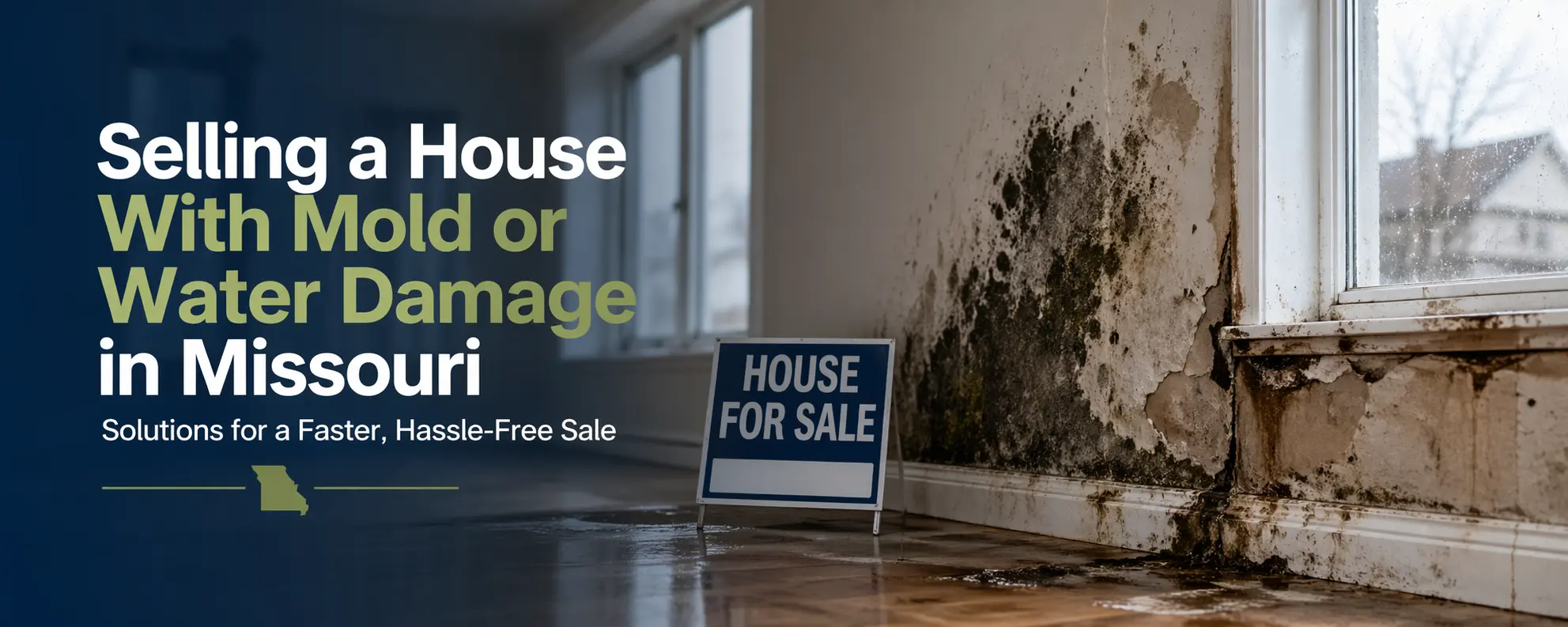
Mold in the basement. Water stains on the ceiling. A musty smell that won’t go away no matter how many times you clean.
If you’re dealing with mold or water damage in your Missouri home, you already know it’s stressful. But when you’re trying to sell that home? The stress doubles. You start wondering if anyone will even make an offer. You worry about inspections, disclosures, and whether you’ll have to sink thousands into repairs before you can list the property.
Here’s the thing — you absolutely can sell a house with mold or water damage in Missouri. Homeowners do it all the time. But how you go about it matters. There are legal requirements you need to follow, decisions to make about repairs, and different selling options that can save you time and money depending on your situation.
This guide breaks it all down so you can move forward with confidence.
How Common Is Mold and Water Damage in Missouri Homes?
More common than most people think. Missouri’s climate is a recipe for moisture problems. Hot, humid summers combined with heavy rainfall create conditions where water intrusion and mold growth happen regularly — especially in older homes.
Basements are the biggest trouble spot. Missouri sits in a region with high water tables and clay-heavy soil. That combination puts constant pressure on foundations, and over time, cracks develop. Water finds its way in. And once moisture gets trapped in a basement or crawl space, mold isn’t far behind.
But basements aren’t the only concern. Roof leaks, plumbing failures, poor drainage around the foundation, and even condensation from HVAC systems can all lead to water damage and mold growth in any part of the house.
The point is — if your home has these issues, you’re not alone. And you’re not stuck.
Do You Have to Disclose Mold or Water Damage When Selling in Missouri?
Yes. Missouri law requires sellers to fill out a Seller’s Disclosure Statement before closing. This form asks specific questions about the condition of the property, including known issues with water intrusion, flooding, drainage problems, and mold.
You’re required to disclose any material defects you know about. That includes past water damage, current leaks, previous mold remediation, and any ongoing moisture issues. You don’t need to hire an inspector or go looking for problems you’re not aware of. But if you know about it, you have to tell the buyer.
Skipping this step or hiding known problems is a bad idea. Missouri courts have sided with buyers in cases where sellers concealed defects. If a buyer discovers undisclosed mold or water damage after closing, they can come back with a lawsuit — and those cases can get expensive fast.
If you’re already navigating other property complications, like legal risks that come with selling without a realtor in Missouri, disclosure requirements are another reason to make sure you understand your obligations before listing.
Being upfront about the condition of your home actually works in your favor. It builds trust with buyers and protects you legally after the sale is done.
What Counts as Mold Damage vs. Water Damage?
People often lump these together, but they’re related issues with different implications for a sale.
Water damage refers to the physical harm caused by water where it shouldn’t be. Think warped flooring, stained drywall, rotting wood, peeling paint, or buckled subflooring. Water damage is often visible and can range from minor cosmetic issues to serious structural problems.
Mold damage is what happens when moisture sits long enough for mold to grow. Mold can appear on walls, ceilings, insulation, wood framing, and even inside HVAC ductwork. Some mold is surface-level and easy to clean. Other types — like black mold (Stachybotrys) — can cause health concerns and require professional remediation.
Here’s why the distinction matters when selling. A buyer might overlook a small water stain on the ceiling from a roof leak that’s already been fixed. But the word “mold” triggers a stronger reaction. Many buyers associate mold with health risks and expensive repairs, even when the actual problem is minor.
That emotional reaction is something you’ll need to account for when pricing your home and deciding how to sell it.
Should You Fix Mold or Water Damage Before Selling?
This is the big question most sellers wrestle with. And the honest answer is — it depends on your situation.
When Repairs Make Sense
If the damage is minor and the fix is affordable, making repairs before listing can help you attract more buyers and get a better price. For example, fixing a small roof leak and repainting a water-stained ceiling might cost a few hundred dollars but could prevent buyers from walking away or demanding big concessions.
Surface mold in a bathroom or laundry room is another case where a simple cleanup might be worth doing. A little bleach, proper ventilation, and maybe some fresh caulk can solve the problem without a major expense.
When Repairs Don’t Make Sense
If you’re dealing with widespread mold, structural water damage, or a chronic moisture problem that keeps coming back, the cost of full remediation can climb into the tens of thousands. In those cases, pouring money into repairs before selling doesn’t always make financial sense — especially if you’re already in a tight spot.
Professional mold remediation in Missouri typically runs anywhere from $1,500 to $15,000 or more depending on the extent of the problem. Foundation waterproofing can add another $5,000 to $20,000 on top of that. And if there’s structural damage to framing, subfloors, or joists, you’re looking at even more.
For many homeowners, the math just doesn’t work. You spend $20,000 on repairs and maybe get $15,000 more at sale. That’s a net loss.
In situations like these, selling the home as-is to a cash buyer is often the smarter move.
Can You Sell a House As-Is With Mold in Missouri?
Absolutely. There’s no Missouri law that says you have to fix mold or water damage before selling. You can sell the property in its current condition — as long as you disclose what you know.
Selling as-is means you’re telling buyers upfront that you won’t be making repairs. The buyer accepts the property with its existing issues and takes on responsibility for fixing them after closing.
Now, selling as-is on the open market can be tricky. Most traditional buyers are using mortgages, and lenders often require the home to meet certain condition standards. If an appraiser or inspector flags mold or significant water damage, the lender might refuse to approve the loan — killing the deal.
That’s why many homeowners with mold or water damage choose to sell directly to a cash home buyer. Cash buyers don’t rely on bank financing, so there are no appraisal requirements or lender conditions to worry about. They buy homes in any condition and typically close much faster.
If you’re in the Springfield area and dealing with a damaged property, companies that buy houses in Springfield, Missouri specialize in exactly these kinds of situations. No repairs, no inspections, no waiting months for a buyer who might back out.
How Does Mold or Water Damage Affect Your Home’s Value?
There’s no getting around it — mold and water damage will reduce your home’s market value. How much depends on the severity of the problem.
Minor water stains or surface mold might knock 5% to 10% off what you’d otherwise get. But extensive mold contamination, foundation water damage, or structural deterioration can reduce the value by 20% to 30% or more.
Buyers factor in the cost of repairs when making their offers. And most buyers overestimate repair costs because they’re not sure exactly what they’re dealing with. A mold problem that might cost $3,000 to fix could scare a buyer into offering $10,000 less — just to be safe.
This is another reason selling to a cash buyer can work in your favor. Experienced cash buyers deal with damaged properties regularly. They know what repairs actually cost, so their offers tend to be more realistic than what you’d get from a nervous first-time buyer on the open market.
What If Mold or Water Damage Led to Other Legal Issues?
Sometimes mold and water damage aren’t the only problems a homeowner is dealing with. Ongoing damage can lead to unpaid contractor bills, disputes with insurance companies, or even liens against the property.
If a contractor did remediation work and wasn’t paid, they could file a mechanic’s lien. If the damage led to code violations, the city might place a lien as well. These complications can make selling even harder — but they don’t make it impossible.
Missouri homeowners dealing with judgments or liens should understand what happens if there are judgments against a house in Missouri and how those get handled at closing. In most cases, liens are paid from the sale proceeds, and a title company helps sort everything out.
What About Vacant Properties With Mold or Water Damage?
Vacant homes are especially vulnerable to mold and water damage. Without regular climate control and maintenance, small leaks turn into big problems fast. A slow drip from a pipe can go unnoticed for months, leading to widespread mold growth behind walls and under floors.
And vacant properties come with their own set of headaches beyond just the damage itself. Break-ins, vandalism, and even squatters occupying the property can complicate an already difficult situation.
If you’re sitting on a vacant home that’s deteriorating, every month you wait costs you money. Property taxes keep accruing, insurance on a vacant property is more expensive, and the damage only gets worse over time. Selling sooner rather than later — even at a discount — often saves you more in the long run.
How to Sell a House With Mold or Water Damage in Missouri — Step by Step
If you’ve decided to sell, here’s a straightforward path forward.
1. Assess the Damage
Get a clear picture of what you’re dealing with. You can hire a mold inspector or water damage specialist for a professional assessment. This isn’t legally required, but it helps you understand the scope of the problem and make informed decisions about repairs vs. selling as-is.
A typical mold inspection in Missouri costs between $300 and $600. It’s money well spent if you’re unsure how bad things are.
2. Decide on Repairs vs. Selling As-Is
Based on the assessment, decide whether repairs make financial sense. Minor fixes that cost a few hundred dollars? Probably worth doing. Major remediation that runs into five figures? You might be better off selling as-is and letting the buyer handle it.
3. Complete Your Seller’s Disclosure Statement
Fill out the disclosure form honestly and thoroughly. Document everything you know about water intrusion, mold, past repairs, and ongoing issues. Keep copies of any inspection reports, remediation receipts, or contractor invoices — buyers and their agents will ask for them.
4. Choose Your Selling Method
You have three main options.
List on the open market — This can work if the damage is minor and the home is otherwise in good shape. But expect longer days on market, more negotiations, and possible deal fall-throughs due to financing issues.
Sell FSBO (For Sale by Owner) — You save on commission but take on more work and risk. And with a damaged property, the pool of interested buyers shrinks.
Sell to a cash buyer — This is usually the fastest and simplest option for homes with significant damage. No repairs, no commissions, no financing contingencies. You get a fair cash offer based on the property’s current condition and can close in as little as a couple of weeks.
5. Close the Sale
Once you’ve accepted an offer, the title company handles the closing process. They’ll run a title search, prepare the documents, and make sure everything is in order. If there are liens or judgments against the property, those get resolved at closing from the sale proceeds.
What Mistakes Should You Avoid When Selling a Damaged Home?
A few common missteps can cost you time and money.
Don’t try to hide the damage. Painting over mold or covering up water stains might fool a buyer temporarily, but inspections will catch it. And concealing known defects opens you up to legal liability after closing.
Don’t overspend on repairs. It’s tempting to think that fixing everything will get you top dollar. But with significant damage, you rarely recoup the full cost of repairs in the sale price. Run the numbers before committing to expensive remediation.
Don’t wait too long. Mold and water damage get worse over time, not better. A problem that costs $2,000 to fix today might cost $10,000 six months from now. If you know you want to sell, act sooner rather than later.
Don’t ignore your legal obligations. Missouri’s disclosure requirements exist for a reason. Follow them. It protects you just as much as it protects the buyer.
Sell Your House With Mold or Water Damage in Springfield, MO
Dealing with mold or water damage is frustrating enough without the added pressure of trying to sell a home. But you have options — and more than you might think.
If your home in Springfield or Republic, Missouri has mold, water damage, or other condition issues, HomeLink Properties can help. We buy houses in any condition for cash — no repairs, no cleaning, no agent commissions, and no waiting around for a buyer who might back out at the last minute.
We understand the local market, we know what these repairs actually cost, and we make fair offers based on your home’s current condition. The process is simple, and we can close on your timeline.
Reach out today for a no-obligation cash offer. There’s no pressure and no commitment — just a straightforward conversation about your options.